Paris St-Germain raised concerns with Uefa over the size of their allocated dressing room at Red Bull Arena ahead of the 2026 Uefa Super Cup match against Aston Villa, with officials from the French club informing Uefa at a pre-game meeting on Monday that their facilities were too small compared to Villa’s. Uefa responded by allocating PSG an additional, spare dressing room – ordinarily reserved for match officials – to bring their space in line with that given to Unai Emery’s side. No match officials were displaced as a result.
Football’s grandest occasions are rarely won or lost in the corridors beneath the stadium, but they can reveal plenty about how a club sees itself. PSG arrived in Salzburg as European football’s dominant force, and their objection to a dressing room was as much a statement of status as it was a practical complaint.
Aston Villa, by contrast, arrived at this fixture as the competition’s outsiders in every sense but geography. Their return to continental football’s top table, engineered by Emery after three decades without a trophy, made the symbolism of the occasion just as significant as any grievance over square footage.
A champion’s insistence on parity
Salzburg, Austria: The dispute centred on the allocation of Red Bull Salzburg’s stadium. Villa were handed the home dressing room, while PSG were assigned the away facilities.
ALSO READ: City beat Atletico, Maresca delighted with Marmoush-Semenyo pairing
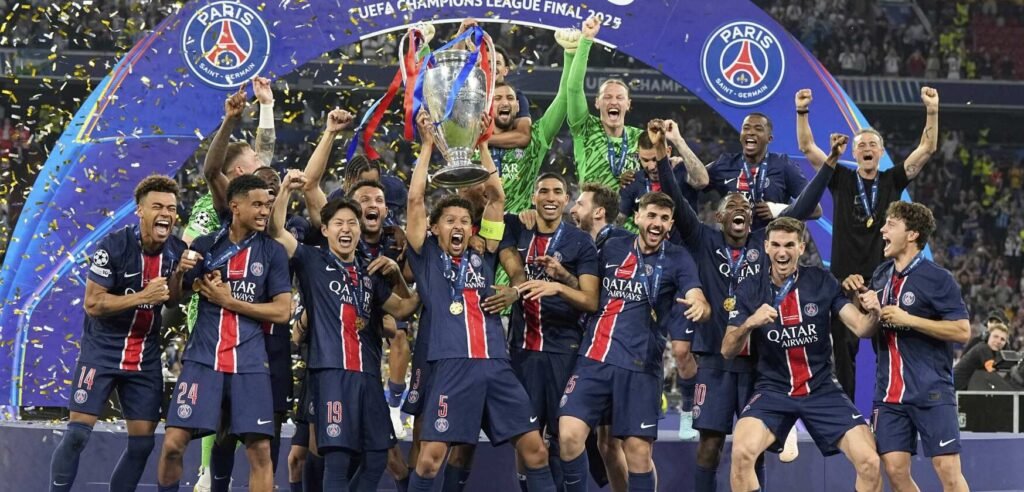
PSG’s objection was rooted in stature rather than simple discomfort. As reigning Uefa Super Cup champions, having beaten Tottenham Hotspur on penalties in last year’s final, and as the reigning Champions League holders following their victory over Arsenal in May, PSG officials made clear at Monday’s pre-match meeting that they expected facilities to reflect that standing. Uefa’s decision to source an additional room – one typically set aside for match officials – allowed the governing body to resolve the matter.
Villa’s rare night among Europe’s elite
For Emery, arriving in Salzburg carried a different weight entirely. Villa’s route here was built on the back of a Europa League triumph over Freiburg in Istanbul, a result that ended a 30-year wait for a major trophy and secured the club’s first Super Cup appearance since 1982. Against that backdrop, the dressing room dispute mattered little to a squad simply relieved to be competing on this stage again.
Emery’s side used Salzburg’s home changing room, the sort of detail that would ordinarily pass unremarked were it not for PSG’s intervention. It underlined the contrast between two clubs arriving at the same fixture from very different directions: one defending multiple titles, the other rediscovering what it means to compete for them.
A squad reshaped days before kick-off
Luis Enrique travelled with a 20-man squad that included Bradley Barcola and Vitinha, both central to PSG’s continued dominance domestically and in Europe. Also included was Lucas Digne, whose move to PSG from Aston Villa was confirmed on 9 August 2026.
Digne’s switch offers a reminder of how quickly allegiances shift in the modern game, even as the institutions themselves remain fixed in their rivalries. His presence in the away dressing room he once might have expected to occupy as a home player only sharpened the sense that this fixture carried layers beyond the pitch itself.
Looking ahead
With the dressing room matter settled well before kick-off, attention now turns to the football itself and what victory – or defeat – means for both clubs’ seasons ahead. For PSG, success would extend a period of sustained dominance in both continental competitions; for Villa, simply reaching this stage already represents a marker of Emery’s transformative impact, with further progress offering the clearest evidence yet that their return to Europe’s elite is no longer a novelty but a fixture of the landscape.