Real Madrid, world football’s richest club with over €1 billion in revenue in 2023-24, have gone without a major trophy since summer 2024 and have failed to reach a Champions League semifinal in that time, with Barcelona now favourites to win LaLiga for a third straight season. Under manager Jose Mourinho, who has not won a major trophy in over a decade, the club has continued spending heavily, including a club-record €125 million fee for 19-year-old Yan Diomande, with reports suggesting three further signings are planned. The pattern has prompted growing scrutiny over whether Madrid’s transfer strategy is actually built around winning.
There was a version of Real Madrid, not so long ago, that made spending money look like the easiest thing in the world. Every signing seemed to slot into a machine already purring at full power. Now the same machine keeps consuming fuel, at a rate no rival can match, without anyone quite being able to explain what it is producing.
That contrast is the story. Not the size of the cheques, which have never been in question, but what they are buying.
Madrid: Two seasons ago, Real Madrid lost a single league game all season, finished with 95 points, and led LaLiga in goals scored and goals conceded. They beat Manchester City on penalties in the Champions League, avenging a semifinal exit to the same opponents the year before, then survived an extra-time scare against Bayern Munich to reach the final. A 2-0 win over Borussia Dortmund brought a 15th European title. Vinicius Junior finished second in that year’s Ballon d’Or voting, Jude Bellingham third in his debut season, also winning LaLiga’s Player of the Year award. It was, by any measure, a club operating at the peak of its powers, on and off the pitch.
The machine that stopped delivering
Since the summer of 2024, none of that momentum has survived. Real Madrid have not won a major trophy in that time, and have not progressed beyond the Champions League quarterfinals — a competition they have made their own for over a decade. Domestically, the picture is starker still: Barcelona are favourites to be crowned LaLiga champions for a third consecutive season, meaning Madrid are no longer even the best team in their own country, let alone Europe.
ALSO READ: PSG’s dressing room complaint prompts Uefa to find them extra space for Super Cup
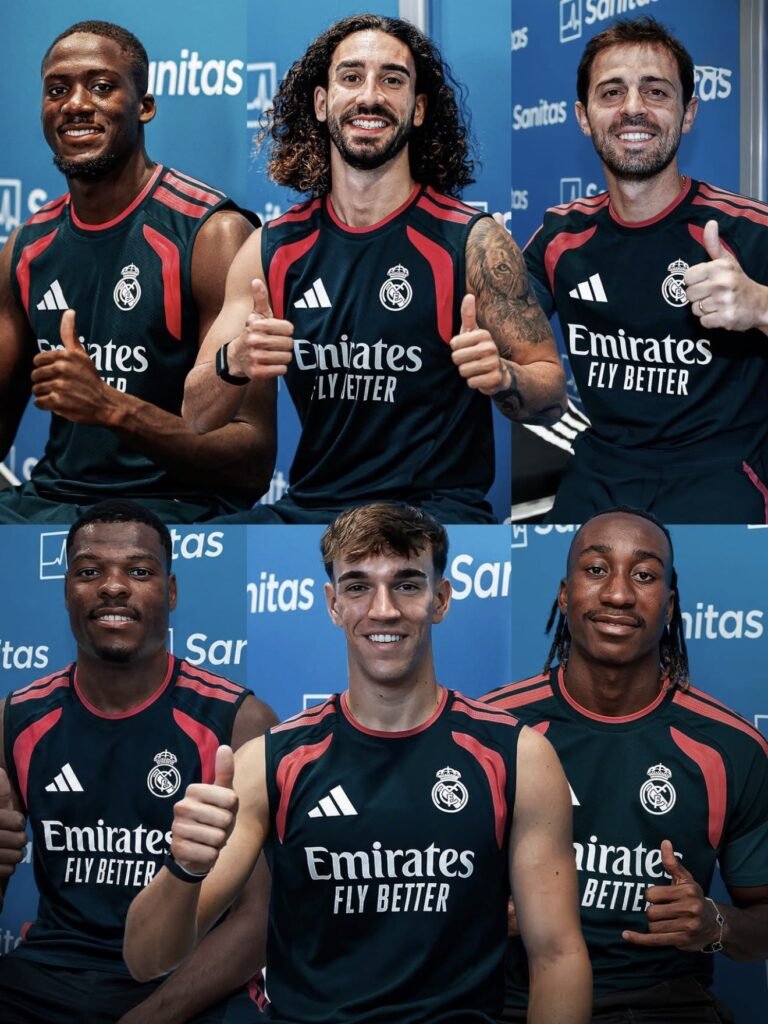
By December 2025, Madrid found themselves four points behind Barcelona, with speculation swirling around Xabi Alonso’s position as manager. Alonso had arrived with a clear brief — replacing Carlo Ancelotti and overseeing the arrivals of Trent Alexander-Arnold, Alvaro Carreras, Dean Huijsen and Franco Mastantuono — yet the results never matched the outlay. Kylian Mbappe’s free arrival at 25, so shrewd on the balance sheet, has not been enough to offset the wider drift.
Mourinho’s return and a puzzling market
Into that vacuum has stepped Jose Mourinho, whose appointment arrives with a complicated history attached. His last four jobs, at Tottenham, Roma, Fenerbahce and Benfica, were widely regarded as unimpressive, and he has not lifted a major trophy in over a decade. Reports from Sports Illustrated in May 2026 suggested Mourinho, then incoming, was demanding at least four signings to fix the squad’s deficiencies, an approach described at the time as an aggressive transfer strategy.
READ MORE: East Bengal face Al Arabi in Kolkata with AFC Champions League 2 at stake
What has followed has only deepened the confusion. Madrid paid a club-record €125 million for Yan Diomande, a 19-year-old arriving from RB Leipzig with just 34 professional domestic-league starts to his name. There was talk over the summer of moving on Vinicius Junior, before he ultimately stayed — a decision that, taken alongside the Diomande fee, has left observers struggling to identify the coherent thread running through Madrid’s roster planning. According to a Yahoo Sports report via Madrid Universal, three more signings are still planned, extending what has already been a busy and expensive window.
Spending power without a clear plan
None of this is happening in isolation from Madrid’s financial dominance. Their €1 billion-plus revenue for 2023-24 comfortably outstripped Manchester City’s €838 million, the next-highest figure in the game. That gap gives the club more room for error than anyone else in football — the capacity to pay record fees for teenagers, to swing and miss, and to still be back in the market within months. But financial muscle has never, by itself, guaranteed footballing coherence, and the past eighteen months have exposed that gap more clearly than at any point since Madrid’s last barren stretch.
The question now is not whether Real Madrid can afford to keep spending like this. Clearly, they can. It is whether Mourinho, working with a squad shaped by his predecessor and reshaped again by his own demands, can turn that spending into a version of Madrid that resembles the one which beat City, survived Bayern, and dispatched Dortmund in a final not so long ago. With Barcelona pulling clear domestically and the Champions League quarterfinal wall still unbroken, the coming months, and those three further signings still to arrive, will offer the clearest indication yet of whether this iteration of Real Madrid is being built to win, or simply built to spend.