
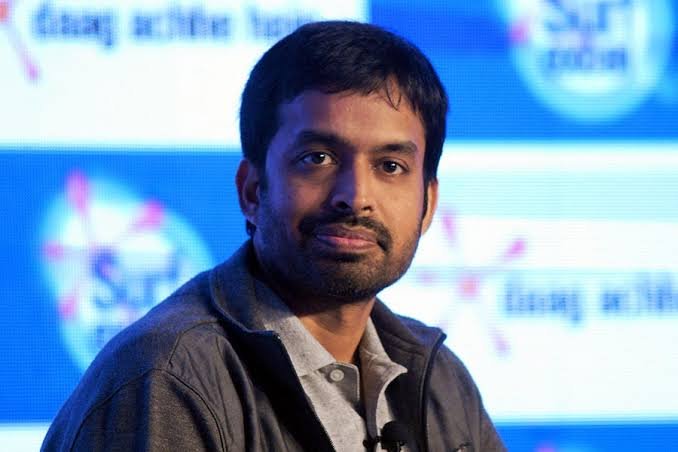
Pullela Gopichand, the former All England champion who built the coaching system behind Saina Nehwal and P.V. Sindhu, has spoken ahead of the BWF World Championships in New Delhi, declining to draw comparisons between his own playing generation and today’s crop of Indian shuttlers. Speaking before the tournament begins, Gopichand expressed optimism that India hosting the World Championships again could accelerate the country’s next wave of champions. The 30th edition of the World Championships gets underway in New Delhi on the Monday following the interview, marking the tournament’s return to India since Hyderabad staged it in 2009.
There is a particular kind of restraint required of a man who built an empire and now watches others inherit it. Gopichand did not simply produce champions in the years after his own career ended; he engineered the conditions for them, brick by brick, at an academy that has since become the spine of Indian badminton. That he now speaks of the current generation with something closer to admiration than nostalgia says as much about his temperament as it does about the sport’s transformation.
A coach’s refusal to measure his own shadow
Gopichand, 52, has never been short of achievement to lean on. His 2001 All England title, won against China’s Chen Hong, remains one of the defining results in Indian badminton history, and his five consecutive national championships between 1996 and 2000 marked him as the standard-bearer of his era. Yet when asked to weigh his generation against today’s, he declined the invitation entirely.
It is a subtle but telling distinction. Gopichand’s own career unfolded in an era when survival, rather than ambition, shaped a player’s outlook.
The academy that changed the arithmetic
That shift in ambition did not happen by accident. When Gopichand opened his academy in Hyderabad in 2008, he was effectively building the infrastructure his own generation never had. The results have been substantial: since India first hosted the World Championships in Hyderabad in 2009, the country has collected 14 medals at the event, a tally crowned by Sindhu’s landmark gold in 2019.
ALSO READ: Ayush Shetty draws world No. 1 Shi Yu Qi in World Championships opener
Nehwal and Sindhu emerged from the system Gopichand helped construct after taking over as national coach in 2006, and their success reshaped what Indian families believed was possible in the sport. The Padma Shri he received in 2005, followed by the Padma Bhushan in 2014, reflected recognition of a body of work that had already begun reshaping the domestic landscape well before Sindhu’s 2019 triumph.
A father watching, not measuring
Among those shaped by that environment is Gopichand’s own daughter, Gayatri, whose career he discusses with a father’s pride rather than a coach’s calculation. She has become a Commonwealth Games medallist, reached two All England semifinals, and stands as the highest-ranked women’s doubles player India has produced.
Looking toward New Delhi’s opportunity
For Gopichand, the significance of this championship extends well beyond the draw sheet, on which India’s Ayush Shetty has already been paired against world number one Shi Yu Qi in the men’s singles opening round. He views the tournament’s return to Indian soil as a potential catalyst for the sport’s next chapter, much as Hyderabad’s staging in 2009 helped set the stage for the achievements that followed.
As the competition begins in New Delhi, the immediate storylines will centre on results on court, including how Shetty fares against the world’s top-ranked player. But Gopichand’s broader point lingers over the tournament: a home World Championships is as much about what it seeds for the future as what it delivers in the coming week, and India’s badminton establishment will be watching for both in equal measure.